Years before Digital Audio Workstations, such as Cubase, Digital Performer, Logic, Nuendo Sonar and Pro Tools became de rigueur for audio production, studio professionals were generally divided into two camps: Those who produced work using Fairlight technology, and those who worked on New England Digital’s Synclavier or Synclavier II Workstations.
To this day I think the Synclavier II must be the most beautiful electronic synthesizer ever made.
Both the Fairlight CMI and NED's Synclavier were staggeringly expensive by today’s standards, and yesterday’s. The Synclavier was a modular and system, meaning a unit could be purchased in a variety of custom configurations. One could easily spend over a hundred thousand dollars on a unit. I was the Head of Production for a studio that hosted three such machines.
Other popular machines of the day whose capabilities resembled Fairlight and Synclavier technologies were Yamaha’s DX-7 and Kurzweil’s K250, which was first to offered ROM-based sampling in the unit itself. Both the DX-7 and the K250 were undoubtedly among the top of their class as far as synthesizers go. But the quantum leap between those machines and units offered by New England Digital and Fairlight, was that the latter two manufactured something more than a synthesizer. In fact, it could be stated that they produced the precursors to today’s Digital Audio Workstations.
I would venture to guess that 90% of the US television commercials, produced in the mid eighties to mid nineties, and much television scoring in general, was produced using Synclaviers or Fairlights. I personally didn't know a music production company that didn't use one or the other as a primary compositional tool.
Eventually, and for a variety of reasons, there was a paradigm shift away from these behemoths to newer, cheaper technologies, such as Digital Performer and Logic.
Synclavier operators and users, however, tend to have a relationship with their units much the same way that a violinist who owns a Stradivarius has with his instrument. Indeed such a relationship exists between most traditional musicians and their instrument. Unlike a piece of software, a Synclavier is a musical instrument, on par with, –and in the class of– Stradivarius violins, and vintage Gibson and Fender guitars.
Today’s soft synths have a lot going for them, but I don’t know of any that endear that kind of love, or anyone who thinks software has what we colloquially refer to as ‘soul’.
I’ve worked on a variety of Synclavier units, since the prototype stage and through every upgrade up to 1997. I still know of some instruments that continue to be used in production today, despite the advances in technology and the advent of Pro Tools, I think New England Digital’s musical machines continue to sound great.
Sunday, August 01, 2004


Friday, June 25, 2004
Synclavier II Summertime Seminar
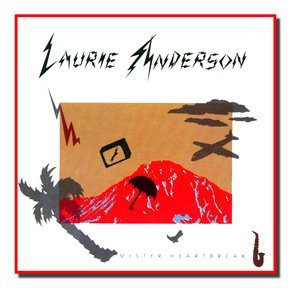 On June 25, 1984 I was perhaps the youngest in attendance at The 3rd Annual Synclavier II Summertime Seminar. My unsolicited to calls to New England Digital must have garnered in Brad Naples, the Executive VP and Chief Operating Officer, a curiousity about who this eighteen/nineteen year-old kid was who kept calling about their products. Eventually I would own a Stealth black Synclav but to stop my incessant calling they loaned me a Synclavier II –Serial # 003140-K, outfitted with an incredible memory capacity of 64K! (<-----sarcasm alert="" br="">
Moreover, they invited me up to Dartmouth where the weeklong seminar was taking place.
Lecturers included:
Sydney Alonso: President of New England Digital and Chief of Hardware Design
Laurie Anderson: Renowned composer and performer ('Mister Heartbreak' had just been released)
Jon Appleton: The Dartmouth College Music Professor who had first conceived of such a machine/instrument
Denny Jaeger: Movie and television soundtrack synthesist and composer. Original consultant on Synclavier II development
Pat Metheny: Renowned guitarist and composer
Oscar Peterson: Renowned Jazz pianist and composer
Martin Rushent: Producer for the Human League, Go Go's, and more
Seminar attendees included both early adopters of the instrument, and potential customers:
Andrew Batchelor, Anthony Aliprantis, Barb Scott, Craig Harris, Dave Edgar, Dave Whittaker, Ed Morgan, Eric Morgeson, F. Navarette, G. Suarez, Gorden Kent, Jay McDonald, Jim Harris, John Slowiczek, Jon Kwasie, Laura Christman, Lee Blaske, Lee Kopp, Louis Resto, Mark Birmingham, Mastes, Mike Hoenig, Mike Thorne, Moreno & Gil, N. Schwartzman, Naut Humon, Neil Davis, Paul Burlingame, Raven Kane, Reed Hawthorne, Robin Halpin, Ron Friedman, Sherman Foote, Steve Short, Ted Amheiter, Tom Law, Tom Silverman, Torben Holme-Pedersen, Wil Roper, William Burnette, William Elliot, Michael Banks and Anthony Marinelli, and myself.
What did I learn? I wasn't the only audio geek on the planet! Hooray!
Synclavier, Synthesizer
Tuesday, June 01, 2004
Advertising Age Names Top Ten Jingles
From Advertising Age magazine, by way of The Journal Sentinel Online: the Top Ten Jingles of the Twentieth Century (with new links to YouTube!).
1. "You Deserve a Break Today" (McDonald's)
2. "Be All That You Can Be" (U.S. Army)
3. "Pepsi Cola Hits the Spot" (Pepsi)
4. "M'm, M'm, Good" (Campbell's Soup)
5. "See the USA in Your Chevrolet" (General Motors)
6. "I Wish I Was an Oscar Mayer Weiner" (Oscar Mayer Meats)
7. "Double Your Pleasure, Double Your Fun" (Wrigley's Doublemint Gum)
8. "Winston Tastes Good Like a Cigarette Should" (R.J. Reynolds Winston)
9. "It's the Real Thing" (Coca Cola)
10. "Brylcreem - A Little Dab'll Do Ya" (Combe Incorporated)
1. "You Deserve a Break Today" (McDonald's)
2. "Be All That You Can Be" (U.S. Army)
3. "Pepsi Cola Hits the Spot" (Pepsi)
4. "M'm, M'm, Good" (Campbell's Soup)
5. "See the USA in Your Chevrolet" (General Motors)
6. "I Wish I Was an Oscar Mayer Weiner" (Oscar Mayer Meats)
7. "Double Your Pleasure, Double Your Fun" (Wrigley's Doublemint Gum)
8. "Winston Tastes Good Like a Cigarette Should" (R.J. Reynolds Winston)
9. "It's the Real Thing" (Coca Cola)
10. "Brylcreem - A Little Dab'll Do Ya" (Combe Incorporated)
Monday, December 01, 2003
Sound of the Year: 2003 – Shock and Awe
The 2003 Critical Noise Sound of the Year belongs to 'SHOCK AND AWE', encompassing:
A: It is the sound of large scale aerial bombing in tandem with reverberating befuddlement that results from a massive lapse of logic at a governmental level (or alternately, a brilliantly devised strategy of subterfuge, i.e. 'Weapons of Mass Destruction')
How else might a terrorist attack on America be leveraged to invade a sovereign nation whose leader, however despicable, had nothing to do with those events?
+ + +
HOW THE SOUND OF THE YEAR IS SELECTED:
The Critical Noise Sound of the Year goes to that sound source, event, entity, happening or concept which so effectively produces wide response and reaction, whether intentional or not, such that it stirs collective emotion, inspires discussion, incites action, or otherwise lends itself to cultural analysis and resonates across the globe.
- The sounds of the military manoeuvres in Baghdad (CNN).
- The heated and often convoluted debate leading up to the military exchange with Iraq.
- The fall of Baghdad: for some reason to rejoice, for others a deafening thud.
A: It is the sound of large scale aerial bombing in tandem with reverberating befuddlement that results from a massive lapse of logic at a governmental level (or alternately, a brilliantly devised strategy of subterfuge, i.e. 'Weapons of Mass Destruction')
How else might a terrorist attack on America be leveraged to invade a sovereign nation whose leader, however despicable, had nothing to do with those events?
+ + +
HOW THE SOUND OF THE YEAR IS SELECTED:
The Critical Noise Sound of the Year goes to that sound source, event, entity, happening or concept which so effectively produces wide response and reaction, whether intentional or not, such that it stirs collective emotion, inspires discussion, incites action, or otherwise lends itself to cultural analysis and resonates across the globe.
Wednesday, October 01, 2003
EXPERIENCE: Traditional Packaging Not Required
Apple launched iTunes in January of 2001. The product, it turns out, is a music supervisor's delight.
But in order to maximize its usefulness to me, I've had to rather compulsively spend inordinate amounts of time transferring media from one platform to another. Now, two years later I've finally burned through a life's collection of Compact Discs and DATS, and even digitized my old audio cassettes, so that I can access it all via the iTunes app. The net result is that as of today I've amassed one hundred and ninety seven gigabytes of audio, a collection that includes both MP3s and AIFF files. An even though I've been using computers for well over 20 years, I'm still amazed that how much audio can now fit on a single drive.
Here's a question: What am I going to do with all that left over packaging?
Along the way I came to the following realization:
In the past, the vinyl record and its jacket was not just a vehicle for distribution, but actually part and parcel of the entertainment experience. The same can’t be said for Compact Discs, which are about as experiential as a box of Tic Tacs. Once the Tic Tacs are gone, you don’t keep the packaging. So it goes with CDs. Once a customer has transferred audio from a CD to their hard drive, the disc, Digipak or jewel case it was transported in, all instantly become garbage.
The iTunes store itself has replaced packaging to some extent –as has each artist’s own website– and both definitely provide an experience. But given how digital audio is wreaking havoc on the traditional music business model, how will artists in the future reach a substantial audience? Because global awareness is one reason why an artist signs with a record label, right? Well, I think an artist can reach a worldwide audience –and significantly increase their market share– by accepting sponsorship and corporate patrons. Call it The Medici Music Model.
I am NOT suggesting artists accept traditional spokesperson-styled endorsement deals. Nor am I suggesting that performers tell their fans that they use and enjoy a sponsor’s products unless that is part of an overall contractual negotiation/obligation.
However, I do put forward that modern merchants can power up their branding possibilities by underwriting individual artists and entertainers beginning with the recording and distribution of an artist's works similar to the same way as Coca Cola does right now by underwriting Charlie Rose's talk show. That is, no explicit endorsement by the artist for the patron's product or service required or expected –just a public word of thanks by the artist for the sponsorship (unless otherwise negotiated by the sponsor). For artists (unattached to traditional record labels), such relationships can significantly increase their own market share or fan base by a tremendous margin.
Let's consider a future where songwriters and performers aren't signed –they're underwritten. And stars won't endorse products; they'll partner with the companies that make them. (I call such strategic partnerships ROCK BRANDS)
For individual musical artists, regardless of whether they accept patronage, it's arguably all about the experience; therefore there's no reason to insist on packaging your music on a Compact Disc, or in a jewel case. You can sell anything –oats, soap, flowers, swag, art, books, marketing collateral, tequila and collectibles of all sorts– and package the merchandise with a coupon redeemable at an online store for one's desired music. For ten bucks, do your fans prefer A) one CD, or B) one T-Shirt that comes with a unique code enabling a download of a complete album (or perhaps any ten songs from your repertoire) from your online site?
In the future, musicians may resemble entrepreneurs who sell not just songs, but are associated with an array of products, which will use the artist's own music to add value to a number of consumer goods and services. In tandem, the brand partnerships will serve as a distribution vehicles for the music and the artist's message.
But in order to maximize its usefulness to me, I've had to rather compulsively spend inordinate amounts of time transferring media from one platform to another. Now, two years later I've finally burned through a life's collection of Compact Discs and DATS, and even digitized my old audio cassettes, so that I can access it all via the iTunes app. The net result is that as of today I've amassed one hundred and ninety seven gigabytes of audio, a collection that includes both MP3s and AIFF files. An even though I've been using computers for well over 20 years, I'm still amazed that how much audio can now fit on a single drive.
Here's a question: What am I going to do with all that left over packaging?
Along the way I came to the following realization:
In the past, the vinyl record and its jacket was not just a vehicle for distribution, but actually part and parcel of the entertainment experience. The same can’t be said for Compact Discs, which are about as experiential as a box of Tic Tacs. Once the Tic Tacs are gone, you don’t keep the packaging. So it goes with CDs. Once a customer has transferred audio from a CD to their hard drive, the disc, Digipak or jewel case it was transported in, all instantly become garbage.
The iTunes store itself has replaced packaging to some extent –as has each artist’s own website– and both definitely provide an experience. But given how digital audio is wreaking havoc on the traditional music business model, how will artists in the future reach a substantial audience? Because global awareness is one reason why an artist signs with a record label, right? Well, I think an artist can reach a worldwide audience –and significantly increase their market share– by accepting sponsorship and corporate patrons. Call it The Medici Music Model.
I am NOT suggesting artists accept traditional spokesperson-styled endorsement deals. Nor am I suggesting that performers tell their fans that they use and enjoy a sponsor’s products unless that is part of an overall contractual negotiation/obligation.
However, I do put forward that modern merchants can power up their branding possibilities by underwriting individual artists and entertainers beginning with the recording and distribution of an artist's works similar to the same way as Coca Cola does right now by underwriting Charlie Rose's talk show. That is, no explicit endorsement by the artist for the patron's product or service required or expected –just a public word of thanks by the artist for the sponsorship (unless otherwise negotiated by the sponsor). For artists (unattached to traditional record labels), such relationships can significantly increase their own market share or fan base by a tremendous margin.
Let's consider a future where songwriters and performers aren't signed –they're underwritten. And stars won't endorse products; they'll partner with the companies that make them. (I call such strategic partnerships ROCK BRANDS)
For individual musical artists, regardless of whether they accept patronage, it's arguably all about the experience; therefore there's no reason to insist on packaging your music on a Compact Disc, or in a jewel case. You can sell anything –oats, soap, flowers, swag, art, books, marketing collateral, tequila and collectibles of all sorts– and package the merchandise with a coupon redeemable at an online store for one's desired music. For ten bucks, do your fans prefer A) one CD, or B) one T-Shirt that comes with a unique code enabling a download of a complete album (or perhaps any ten songs from your repertoire) from your online site?
In the future, musicians may resemble entrepreneurs who sell not just songs, but are associated with an array of products, which will use the artist's own music to add value to a number of consumer goods and services. In tandem, the brand partnerships will serve as a distribution vehicles for the music and the artist's message.
Monday, June 02, 2003
Audio Koans: The Zen of Sound
Click on any link below to read all the articles in the three-part Spring/Summer 2003 AUDIO KOANS series exploring the relationship between zen wisdom and sound:
1. If a Tree Falls In The Forest...
2. Sound of One Hand Clapping?
3. Zhàozhōu's Dog
* * *
Like this topic? Explore five-part Winter/Spring 2002 MYSTIC AUDIO series, from the Critical Noise Archive, exploring the relationship between spirit and sound:
1. Glossolalia: Speaking In Tongues
2. The Ur-Song
3. Theta Waves, Mantras & The Lord's Prayer
4. Atomic Rhythms
5. Thai Drum Samples For Sesame Workshop
1. If a Tree Falls In The Forest...
2. Sound of One Hand Clapping?
3. Zhàozhōu's Dog
* * *
Like this topic? Explore five-part Winter/Spring 2002 MYSTIC AUDIO series, from the Critical Noise Archive, exploring the relationship between spirit and sound:
1. Glossolalia: Speaking In Tongues
2. The Ur-Song
3. Theta Waves, Mantras & The Lord's Prayer
4. Atomic Rhythms
5. Thai Drum Samples For Sesame Workshop
Sunday, June 01, 2003
Audio Koans: Zhàozhōu's Dog
Zen Monk Zhao Zhou (778–897) was asked by one of his students if even a dog possessed Buddha nature. In western terms, the question might’ve been: Does a dog possess a soul? Or: Is a dog a sentient being?
To which the monk reportedly replied, “Wu.”
“Wu,” is translated as ‘No’, but through the abstract prism of Zen logic the answer is universally accepted as ‘Yes’.
Personally, I don’t think Zhao Zhou said ‘Wu’, –not at all.
Why do I believe that?
Because ‘Wu’ is a very un-Zen like response; not because of what it means, but because of what it is: A straight answer.
I believe Zhao Zhou’s real answer has been corrupted over the years by chains of brains too brittle to belong to Zen masters.
So what did Zhao Zhou say when asked: "Does a dog possess Buddha nature?"
I think the old monk answered as though he were a dog, imitating its sound on behalf of all canines everywhere: He didn’t cry back ‘Wu’; he howled back ‘Ah-woo’, or simply 'Woo!'
As anyone who’s ever been to a zoo or wolf preserve knows, when wild dogs or wolves howl, it in fact sounds just like ‘Ah-woo’ (pitch ascends on ‘woo’), or 'Woo'.
"Ah-woooooooooooo!"
Makes a little more sense, no?
Or you can scoff, grasshopper, but I'm still going with ‘Ah woo’.
* * *
Click on any link below to read all the articles in the three-part Spring/Summer 2003 AUDIO KOANS series exploring the relationship between zen wisdom and sound:
1. If a Tree Falls In The Forest...
2. Sound of One Hand Clapping?
3. Zhàozhōu's Dog
To which the monk reportedly replied, “Wu.”
“Wu,” is translated as ‘No’, but through the abstract prism of Zen logic the answer is universally accepted as ‘Yes’.
Personally, I don’t think Zhao Zhou said ‘Wu’, –not at all.
Why do I believe that?
Because ‘Wu’ is a very un-Zen like response; not because of what it means, but because of what it is: A straight answer.
I believe Zhao Zhou’s real answer has been corrupted over the years by chains of brains too brittle to belong to Zen masters.
So what did Zhao Zhou say when asked: "Does a dog possess Buddha nature?"
I think the old monk answered as though he were a dog, imitating its sound on behalf of all canines everywhere: He didn’t cry back ‘Wu’; he howled back ‘Ah-woo’, or simply 'Woo!'
As anyone who’s ever been to a zoo or wolf preserve knows, when wild dogs or wolves howl, it in fact sounds just like ‘Ah-woo’ (pitch ascends on ‘woo’), or 'Woo'.
"Ah-woooooooooooo!"
Makes a little more sense, no?
Or you can scoff, grasshopper, but I'm still going with ‘Ah woo’.
* * *
Click on any link below to read all the articles in the three-part Spring/Summer 2003 AUDIO KOANS series exploring the relationship between zen wisdom and sound:
1. If a Tree Falls In The Forest...
2. Sound of One Hand Clapping?
3. Zhàozhōu's Dog
Thursday, May 01, 2003
Audio Koans: One Hand Clapping?
Hakuin Ekaku (1686-1769), the father of Rinzai Zen, reportedly asked his students: “What is the sound of one hand?”
However, in modern practice, the question is often asked in the following manner:
“What is the sound of one hand clapping?”
Apparently, Hakuin would have been happy with a simple demonstration of a hand being thrust out in front of the practitioner, as an appropriate response.
But in regards to the modern version of the question, I have my own less esoteric thoughts on the subject:
The sound of one hand clapping is not the sound of two hands clapping, because the movement of one hand can't be described as clapping at all. Clapping is the sound produced by smacking or slapping two objects together. Thus, one hand making a clapping motion in space is not clapping, but rather it is waving.
So the real question is:
What sound does a waving hand make?
And this is the answer: Well, depending on the vigor of the waver, a waving hand making a repeated waving motion can sound like anything from a soft pulsing heart-like beat or breath; to a slow moving fan blade; to a helicopter propeller chopping through the air.
None of these sounds are audible from afar. However, if you make these motions with your hand next to your ear, you will certainly detect them for yourself.
Call it clapping if it humors you, but it’s not.
* * *
Click on any link below to read all the articles in the three-part Spring/Summer 2003 AUDIO KOANS series exploring the relationship between zen wisdom and sound:
1. If a Tree Falls In The Forest...
2. Sound of One Hand Clapping?
3. Zhàozhōu's Dog
However, in modern practice, the question is often asked in the following manner:
“What is the sound of one hand clapping?”
Apparently, Hakuin would have been happy with a simple demonstration of a hand being thrust out in front of the practitioner, as an appropriate response.
But in regards to the modern version of the question, I have my own less esoteric thoughts on the subject:
The sound of one hand clapping is not the sound of two hands clapping, because the movement of one hand can't be described as clapping at all. Clapping is the sound produced by smacking or slapping two objects together. Thus, one hand making a clapping motion in space is not clapping, but rather it is waving.
So the real question is:
What sound does a waving hand make?
And this is the answer: Well, depending on the vigor of the waver, a waving hand making a repeated waving motion can sound like anything from a soft pulsing heart-like beat or breath; to a slow moving fan blade; to a helicopter propeller chopping through the air.
None of these sounds are audible from afar. However, if you make these motions with your hand next to your ear, you will certainly detect them for yourself.
Call it clapping if it humors you, but it’s not.
* * *
Click on any link below to read all the articles in the three-part Spring/Summer 2003 AUDIO KOANS series exploring the relationship between zen wisdom and sound:
1. If a Tree Falls In The Forest...
2. Sound of One Hand Clapping?
3. Zhàozhōu's Dog
Tuesday, April 15, 2003
RIP Eve Frumkin
Eve Frumkin died in March of 2003.
We were not friends or even associates, but Eve nevertheless left a significant impact on my professional life. The official story will list her as senior vice president/director/producer at Ammirati Puris Lintas. Her clients included Burger King, Compaq, General Motors, Nestle, and UPS. But to me, she was simply 'Eve from Ammirati', and whenever the receptionist announced her presence on the line, I always knew that those words signaled a potential adventure was waiting.
The truth is, Eve was a woman whom I knew only as a voice at the other end of a line. But we spoke often enough that I not only knew her by name, but considered her as a VIP client, requiring more than a response, she required a real human connection.
I was a bit younger than her; her career was nearing its end when mine was just beginning. But I did everything I could during our phone conversations to engage with her befitting her accomplishments and status. If Eve had simply asked me for estimates and had I simply bid those jobs, I would not feel the loss I feel now. The fact is, she engaged me, and made an effort to connect to me, making sure that though our relationship was virtual, it was real.
As it happens, some jobs I won, some I lost. But as long as the work was world class and the paper work delivered on time, all was good with the world. In this respect Eve Frumkin taught this music producer an important lesson when I was still clawing my way into the industry:
You can do anything you want
As long as it's great,
under budget,
on time
and fulfills the marketing objective.
RIP Eve Frumkin! –with an exclamation mark! –Because I'm sure anyone who knows you, knows that you deserve it.
We were not friends or even associates, but Eve nevertheless left a significant impact on my professional life. The official story will list her as senior vice president/director/producer at Ammirati Puris Lintas. Her clients included Burger King, Compaq, General Motors, Nestle, and UPS. But to me, she was simply 'Eve from Ammirati', and whenever the receptionist announced her presence on the line, I always knew that those words signaled a potential adventure was waiting.
The truth is, Eve was a woman whom I knew only as a voice at the other end of a line. But we spoke often enough that I not only knew her by name, but considered her as a VIP client, requiring more than a response, she required a real human connection.
I was a bit younger than her; her career was nearing its end when mine was just beginning. But I did everything I could during our phone conversations to engage with her befitting her accomplishments and status. If Eve had simply asked me for estimates and had I simply bid those jobs, I would not feel the loss I feel now. The fact is, she engaged me, and made an effort to connect to me, making sure that though our relationship was virtual, it was real.
As it happens, some jobs I won, some I lost. But as long as the work was world class and the paper work delivered on time, all was good with the world. In this respect Eve Frumkin taught this music producer an important lesson when I was still clawing my way into the industry:
You can do anything you want
As long as it's great,
under budget,
on time
and fulfills the marketing objective.
RIP Eve Frumkin! –with an exclamation mark! –Because I'm sure anyone who knows you, knows that you deserve it.
Tuesday, April 01, 2003
Audio Koans: If a Tree Falls...
If a tree falls in the forest and there’s no one there to hear it, does it make a sound?
Yes.
I have a feeling the Zen Monk who thought this was a mind bending cryptic puzzle was also a pot smoking fourteen year old who slept through Physics.
Those who answer ‘No’ invariably –an inaccurately– define sound as entirely a sensory response: the effect of electrical stimulus upon brain cognition by a vibrating eardrum. However, unless one is hallucinatory, human ability to sense sound is wholly dependent on an external source causing (air) molecules to vibrate. It is these vibrating particles that comprise sound, not one's ability to sense them.
To clarify, sound and the sense of hearing are two different things.
So, if a tree falls in the forest and there's no one there to hear it, yes, it still causes air molecules to vibrate and therefore makes a sound, independent of any individual capacity to sense those vibrations.
* * *
Click on any link below to read all the articles in the three-part Spring/Summer 2003 AUDIO KOANS series exploring the relationship between zen wisdom and sound:
1. If a Tree Falls In The Forest...
2. Sound of One Hand Clapping?
3. Zhàozhōu's Dog
Yes.
I have a feeling the Zen Monk who thought this was a mind bending cryptic puzzle was also a pot smoking fourteen year old who slept through Physics.
Those who answer ‘No’ invariably –an inaccurately– define sound as entirely a sensory response: the effect of electrical stimulus upon brain cognition by a vibrating eardrum. However, unless one is hallucinatory, human ability to sense sound is wholly dependent on an external source causing (air) molecules to vibrate. It is these vibrating particles that comprise sound, not one's ability to sense them.
To clarify, sound and the sense of hearing are two different things.
So, if a tree falls in the forest and there's no one there to hear it, yes, it still causes air molecules to vibrate and therefore makes a sound, independent of any individual capacity to sense those vibrations.
* * *
Click on any link below to read all the articles in the three-part Spring/Summer 2003 AUDIO KOANS series exploring the relationship between zen wisdom and sound:
1. If a Tree Falls In The Forest...
2. Sound of One Hand Clapping?
3. Zhàozhōu's Dog
Subscribe to:
Posts (Atom)