In January of 1994, Hunter Murtaugh, then Music Director for Young & Rubicam, commissioned our company to produce an International Long Distance Connection Tone for telecommunications giant, AT&T –'World Plus', as they then called the short work.
Our mandate was to convey a friendly internationality in less than two seconds. In fact, the length of the tone was to be precisely a second and a quarter in length. We produced multiple variations, and in the end a submission constructed by the company's staff orchestrator, Louis King, was selected the winner.
Louis is a graduate of the Berklee School of Music, and he also studied privately with Danny Troob. No surprise then, that given his immense talent, Louis won against the more experienced composers that he had directly been competing against.
So, what did Louis score exactly?
• A branded audio asset for AT&T: A telephony logo, a Sonic or Tonal ID
• Emotional feedback to the caller: This process is easy
• A message to the consumer: Our technology is friendly
• A confirmation of a task: Your request has been executed
In short, Louis used sound to deliver a MESSAGE. He did this not by composing a miniature score but by creating a bit of sonic signification: a bit of ear candy whose encoded information would be unpacked by the brain's of each caller. No doubt, an intuitive sense of semiotics was as important to the success of this work as was his knowledge of music or production.
However, as it happens, the deployment a connection tone was never
motivated by any technological necessity. By 1994, telephony
technology allowed for an instantaneous long distance connection. The
use of tone to bridge a call was solely conceived as an opportunity for AT&T to remind
customers of its presence and service.
After we delivered the final asset to the client, it occurred to me that if story enhancement made up the essential part of the Twentieth Century commercial composer's tool kit, that Twentieth First Century sonic artisans might increasingly abe called upon to also demonstrate expertise with signification processes, a heretofore irrelevant subject (for a musician).
Of course, composer's have long understood the emotive power of music. but why not also employ sound to convey encoded information, as this AT&T project made clear to me was a very real possibility?
Monday, January 02, 2006


Sunday, January 01, 2006
Backstory in Audio Branding
 Back in 1996, every film editor with stock sound library fancied him or herself a sound designer. In 2000, every kid with a turntable called himself a DJ, and every DJ called himself a producer.
 And today, it seems like every music production team lists 'Sonic Branding' as one of their capabilities. And who knows really.
The first person I ever heard speak about sonic branding was, Scott Elias, in 1991 or 1992, except that he used the phrase ‘Sonic ID’ instead, and later simply, 'Identity'.
Scott was not himself a musician, but he was the closest thing to a visionary that I knew of. He was also a poet and a businessman, and along with his brother –record producer and film composer, Jonathan Elias– co-founded Elias Arts.
In my career I’ve met only two people in advertising that I can unequivocally call futurists, and they were Scott Elias and Robert Greenberg of the acclaimed Interactive production company, R/GA. I was lucky to spend six years working for the former; and produced several audio projects for the latter over the course of a decade.
For all of Scott’s foresight, however, Elias (then Elias Associates) didn’t win many projects that lent themselves to sonic branding during my tenure ('91-'96). This is by no means a slight against the company, but rather to call attention to the fact that such jobs were few and far between. Nor did there seem to be many commercial composers who actually filtered their assignments through a brand strategy.
As a result, I have a pet theory that music production companies didn't start providing sonic branding because advertising agencies and brand consultants asked them for it, but because music production houses sat down with agency heads and brand strategists and said, 'Look, you guys are overlooking something here'.
Anyway, as with every other music house up through the nineties, Elias’ bread and butter was composing soundtracks –jingles and underscores– for television and radio commercials. The traditional attitude of marrying music to picture held that first and foremost the sound track should ‘help tell the story’ –Which unless explicitly stated, generally meant,'support the narrative' and punctuate the edit. Since advertisements are often thought of as mini-films, this way of thinking about music for ads, –however limited in retrospect– made complete sense for the time.
I left Elias before the company made substantial forays into sonic branding, before branding was even really in the popular consciousness the way it is now. However, while I was at Elias, I worked on several projects that would eventually serve to shape my own developing concepts regarding audio as an instrument of marketing, which I categorize as a branch of semiotics (an idea which I'll examine further in subsequent posts).
Even before projects got started, there were other tasks required to the preparation for a given job that also shaped my evolving understanding that film scoring and branded audio might be two individual disciplines.
For instance, pre-ProTools, our composers worked on Synclaviers whose mini-computer cores offered severely limited disc space by today's standards: one composer might transfer 8 to 10 MB of sampled audio from 9 or 10 floppy discs before other composers complained about the hog using up all the hard drive space. The result being that a composer had to decide which specific sounds he or she wanted to use before beginning any project.
As I gained more experience as a producer, and earned the trust of our senior creatives, I was eventually able to suggest sounds for certain projects, or specific cues, the same way one might suggest using a specific session musician.
And as it turns out, performing such mundane tasks such as the selection and categorization of individual sounds into palettes and libraries (for use on a specific project) is not a bad way towards tuning the ear from a purely cinematic skill set to a cognitive filter suitable to the construction of branded audio.
* * *
Click on any link below to read other articles from the five-part January 2006 SONIC SEMIOTICS series exploring the author's musicological development of a personal 'brand mythology' applicable to sonic assets.
Thursday, December 01, 2005
A Plugged In Culture
Over the years I've invariably changed the way I analyze projects regarding applicable audio needs. My initial review of any given project has evolved from straight forward story analysis in my early years, to a thorough consideration of brand strategy -even when a client does not explicitly request it.
Depending on the project, there may be a story to be scored. But in tandem to scoring issues, I've realized we must also be concerned with what palette or combination of sounds is not just right for the score, but right for the brand.
At the same time as my ideas on music production changed –along with the culture, I would like to think–, I observed the emergence of the word 'branding' in the public forum, so that by 1999 it appeared to be upon everyone's lips.
Much like the phrase 'World Wide Web', with which it shared a similar linguistic trajectory, it entered the popular conversation with an abrupt entrance. –And though it may not be true, at the time it seemed to me as if the cult of Brand was most obsessively heralded by the principals of the design company, The Attik, with whom I worked off and on during the latter part of the nineties, and from whom I also learned a great deal on the subject (and art).
The result is one hears differently. The ears tune to a new frequency –the transmission of deliberate, inherent symbolic properties layered onto a music or sound design commission, in an attempt to go beyond the mere enhancement of a story and actually communicate a message through sound.
It almost sounds subliminal, but subliminal advertising assumes a naive audience, whereas branded advertising communications generally rely on intelligent consumers who may also happen to be participants of the brand culture. That is why it works, because both brand and consumer speak the same language, and part of that language is identification of a common semiotic alphabet, which is as musical as it is word and graphic based.
From the inner sanctum halls of a master marketers, to the common parlance of teenagers who are hip to the pitch, it was a tectonic paradigm shift, however it was introduced. One now only need take note of the musical offerings released by celebutante Paris Hilton to recognize that branded music isn't just for TV commercials anymore. It's for everybody, with nary an obstacle to distribution except the inherent possibility that there might not be an contemporary audience for a given concept, as it is framed by its author.
The Cult of Product has unleashed Branded Entertainment upon our now particularly plugged-in culture; and it would be simply horrific to witness, if it wasn't also so damn enjoyable to watch.
Depending on the project, there may be a story to be scored. But in tandem to scoring issues, I've realized we must also be concerned with what palette or combination of sounds is not just right for the score, but right for the brand.
At the same time as my ideas on music production changed –along with the culture, I would like to think–, I observed the emergence of the word 'branding' in the public forum, so that by 1999 it appeared to be upon everyone's lips.
Much like the phrase 'World Wide Web', with which it shared a similar linguistic trajectory, it entered the popular conversation with an abrupt entrance. –And though it may not be true, at the time it seemed to me as if the cult of Brand was most obsessively heralded by the principals of the design company, The Attik, with whom I worked off and on during the latter part of the nineties, and from whom I also learned a great deal on the subject (and art).
The result is one hears differently. The ears tune to a new frequency –the transmission of deliberate, inherent symbolic properties layered onto a music or sound design commission, in an attempt to go beyond the mere enhancement of a story and actually communicate a message through sound.
It almost sounds subliminal, but subliminal advertising assumes a naive audience, whereas branded advertising communications generally rely on intelligent consumers who may also happen to be participants of the brand culture. That is why it works, because both brand and consumer speak the same language, and part of that language is identification of a common semiotic alphabet, which is as musical as it is word and graphic based.
From the inner sanctum halls of a master marketers, to the common parlance of teenagers who are hip to the pitch, it was a tectonic paradigm shift, however it was introduced. One now only need take note of the musical offerings released by celebutante Paris Hilton to recognize that branded music isn't just for TV commercials anymore. It's for everybody, with nary an obstacle to distribution except the inherent possibility that there might not be an contemporary audience for a given concept, as it is framed by its author.
The Cult of Product has unleashed Branded Entertainment upon our now particularly plugged-in culture; and it would be simply horrific to witness, if it wasn't also so damn enjoyable to watch.
Sound of the Year: 2005 – Mother Nature's Howl
No doubt, international politics proved as turbulent as ever this year; the war in Iraq rages on; and stories of horror and tragedy continue to emerge from all corners of the globe.
For many American sports fans, the big story of the year was the the Chicago White Sox winning the World Series for first time since 1917. But although the crack of a wooden baseball bat might make for a fine snare sample in an Eco Disco Music (EDM) track, the 2005 Critical Noise Sound of the Year belongs to:
MOTHER NATURE'S HOWL
First, the year began with the aftermath of the Indian Ocean Tsunami, which rolled onto South Asian Shores in late December 2004. The tsunami took over seventy thousand lives and left tens of thousands injured.
Later, at the close of Summer in the northern hemisphere, Hurricane Katrina capped off a record season of 27 named storms, surpassing the record of 21 set in 1933, and killed more than a thousand in 4 US. states,
But though Katrina blew in with violent vigor, it was more than a mere storm, it became a metaphor for everything gone wrong with US government. And as Washington D.C. goes, so goes the world, which also means that any fauz pas by an American administration makes for a grand statement, indeed. Depending on one's politics, the statement was either 'We don't care' or 'We're not prepared'.
Either way, a big story, a global embarrassment and a shock to the system.
Finally, although much of the disaster posed by Katrina on New Orleans can be directly attributable to an inadequate levy system, the event will nevertheless live on as an indicator to the increasing background hum presented by climate change and global warming.
So, perhaps 2005 presented a record year for Hurricanes, but it may very well be that very soon in the future, 2005 will also be framed as the year when freaky weather became normal.
+ + +
HOW THE SOUND OF THE YEAR IS SELECTED:
The Critical Noise Sound of the Year goes to that sound source, event, entity, happening or concept which so effectively produces wide response and reaction, whether intentional or not, such that it stirs collective emotion, inspires discussion, incites action, or otherwise lends itself to cultural analysis and resonates across the globe.
For many American sports fans, the big story of the year was the the Chicago White Sox winning the World Series for first time since 1917. But although the crack of a wooden baseball bat might make for a fine snare sample in an Eco Disco Music (EDM) track, the 2005 Critical Noise Sound of the Year belongs to:
MOTHER NATURE'S HOWL
First, the year began with the aftermath of the Indian Ocean Tsunami, which rolled onto South Asian Shores in late December 2004. The tsunami took over seventy thousand lives and left tens of thousands injured.
Later, at the close of Summer in the northern hemisphere, Hurricane Katrina capped off a record season of 27 named storms, surpassing the record of 21 set in 1933, and killed more than a thousand in 4 US. states,
But though Katrina blew in with violent vigor, it was more than a mere storm, it became a metaphor for everything gone wrong with US government. And as Washington D.C. goes, so goes the world, which also means that any fauz pas by an American administration makes for a grand statement, indeed. Depending on one's politics, the statement was either 'We don't care' or 'We're not prepared'.
Either way, a big story, a global embarrassment and a shock to the system.
Finally, although much of the disaster posed by Katrina on New Orleans can be directly attributable to an inadequate levy system, the event will nevertheless live on as an indicator to the increasing background hum presented by climate change and global warming.
So, perhaps 2005 presented a record year for Hurricanes, but it may very well be that very soon in the future, 2005 will also be framed as the year when freaky weather became normal.
+ + +
HOW THE SOUND OF THE YEAR IS SELECTED:
The Critical Noise Sound of the Year goes to that sound source, event, entity, happening or concept which so effectively produces wide response and reaction, whether intentional or not, such that it stirs collective emotion, inspires discussion, incites action, or otherwise lends itself to cultural analysis and resonates across the globe.
Tuesday, November 01, 2005
How To License Your Songs
 While browsing forums for music or production professionals, I often come across queries from young people asking how they might get their music licensed in commercials. Should they send their demo tapes to music supervisors? Should they create a MySpace page? Would it be a good idea to make electronic press kits? All of the above, of course, but what people really want to know is if there's a way to beat the system? With tongue only partly in cheek (because so much of this is real advice), I submit the following plan of action:
1. Make 10-20 CD demos with cool kitschy artwork. No band/mug shots unless you re a female. If that is the case, slather your nude and deftly Photoshop-ed body across the cover. Apply sticker that reads:
Includes the Number One Hit Single As Heard On Myspace.com!
Or Facebook, or whatever the hot web site is at the moment, okay? Remember Six Degrees? We all know Myspace is so over, anyway.
2. Create mock letterhead with a trendy sounding name for your non-existent management company. You know, something that sounds completely plugged into pop culture. Feel free to use HARAJUKU WORLDWIDE. I made it up and it can be our little inside secret. 'Dude you have a Japanese management company? That's so cool!' Blah blah blah.
Now, writing from the perspective of a manager, write a cover letter, which gives the misleading impression that you are actually who you say you are –a manager, possibly Japanese–, and that among your roster of fabuloso acts, one of your artists has a knack for writing such ‘cinematic’ sounding tracks, that when Clive Davis heard them, even he said:
"Wow".
3. Messenger or Fed Ex your CDs to local editors of film/TV editorial companies. You could in fact email MP3s, but in my experience real managers send out real press kits, and often with swag, like a T-shirt maybe or a signed autographed picture of the artist. Who would want an autographed picture of you? You'd be surprised. Any number of New York diners and pizza parlors, for instance. You might also mention that you read about the company on "some European branding blog”. Whatever you do, don’t forget to scrawl –Requested Material– on cover of package. That said, if you really want someone to give your music serious consideration and if you're ready to be treated like a professional: Then forget express shipping, and messenger the CD over in a Gift Basket – I’m talking gourmet cheese and chocolate truffles.
You are going to be a star, my friend.
4. Please tell me that you were smart enough to send the CDs to specific people whose names you found by scouring the Internet (Google: Association of Independent Commercial Producers, Award Winning Commercials, Commercial Editorial Houses or Commercial Post Production –and go directly to the CLIO and AICP sites and find out who the past award honorees were). You will be particularly interested in collecting the names of –and finding the contact info for: Producers, Art Directors and Copywriters who work at advertising agencies; Commercial editors and Broadcast Designers who work at editorial firms and Post Production houses respectively.
If you also want to get hired as a freelance composer you can also gather the information for music and sound design houses and send your demos to them, as well. You can actually initiate a career as a freelance composer following this same outline and pitching yourself as a writer to music and sound design firms, or simply as a sound designer to film/video editorial companies who frequently keep such a person on staff, stuffed in a closet next to the machine room but nevertheless nicely furnished with ProTools and a bowl of candy. However, for now, let's focus our limited resources on you the songwriter getting a commercial editor interested in a song or track that you've already written and recorded.
Once you know your demo package has been delivered, call these people every two or three weeks and pester them, but in a pleasant way. The first time you call them, be truthful about who you are, and why you want them to listen to your music. But when they ask you how you heard about them, lie and tell them that 'the cool folks at HARAJUKU WORLDWIDE' suggested you call and oh yeah, “they said great things about your work.”
Not your work of course, but the work of the person to whom you're speaking, okay?
Eventually, a film editor will listen to your music, dig it, and cut a TV commercial using one of your precious songs. Their client –the ad guys– will love your indie vibe, and after it goes live you can feel a smug satisfaction in having known all along that you're a genius, babe. More importantly, and more likely, you've come a lot cheaper than the agency paying a local Jingle Haven to rip you off. But don't actually impress upon them how cheap you are, because later you'll be increasing your rate –like in no time.
5. Therefore, when asked how much it will cost to license the track, you just say that:
“I have to check with my management, but I’m sure whatever you have budgeted is fine.”
Since you don’t have a track record, you might even let them use your Magnus Opus for free. Of course, you can still register the track with ASCAP or BMI and collect publishing.
6. So, now your romantic ballad, 'Love You Forever' has been used in a feminine hygiene spot. Great, so do yourself a favor and make a fresh batch of CDs and press kits, only this time, attach a sticker on cover of the jewel box that heralds your budding genius. It might read something like:
'Love You Forever' – As Heard on the Hit Carefree TV Commercial
7. Repeat this process ad infinitum in new markets – that means send your material out to other people/companies that you couldn’t afford to contact the first time around. But now you can because, of course, you're collecting publishing. That should at least cover stamps.
If you didn't send your CD to established music production companies the first time around, now would be a good time to do so. Nothing gets people interested in working with you like already being successful. Also, if you want to write original music for commercials and not just license songs, you'll either need to start your own production company or work through another party.
The reason for this is that major advertising companies want to work with vendors that carry an insurance policy called ERRORS & OMMISSIONS. This protects them in case YOU sold them music that turns out to infringe on someone else's copyright, whether by accident or as a result of conscious plagerization. And since people will sometimes ask you to write a track that is modeled on another track, you'll need to insure yourself against your own stupid mistakes.
However, if you choose to freelance or go on staff with a music house, you won't have to carry this insurance policy yourself.
So, who should you freelance for? Where should you start looking for a job? Well, you can start by knocking on the doors of people who belong to this organization:
Association of Music Producers
In a year or two the cover on your CD should look something like this:
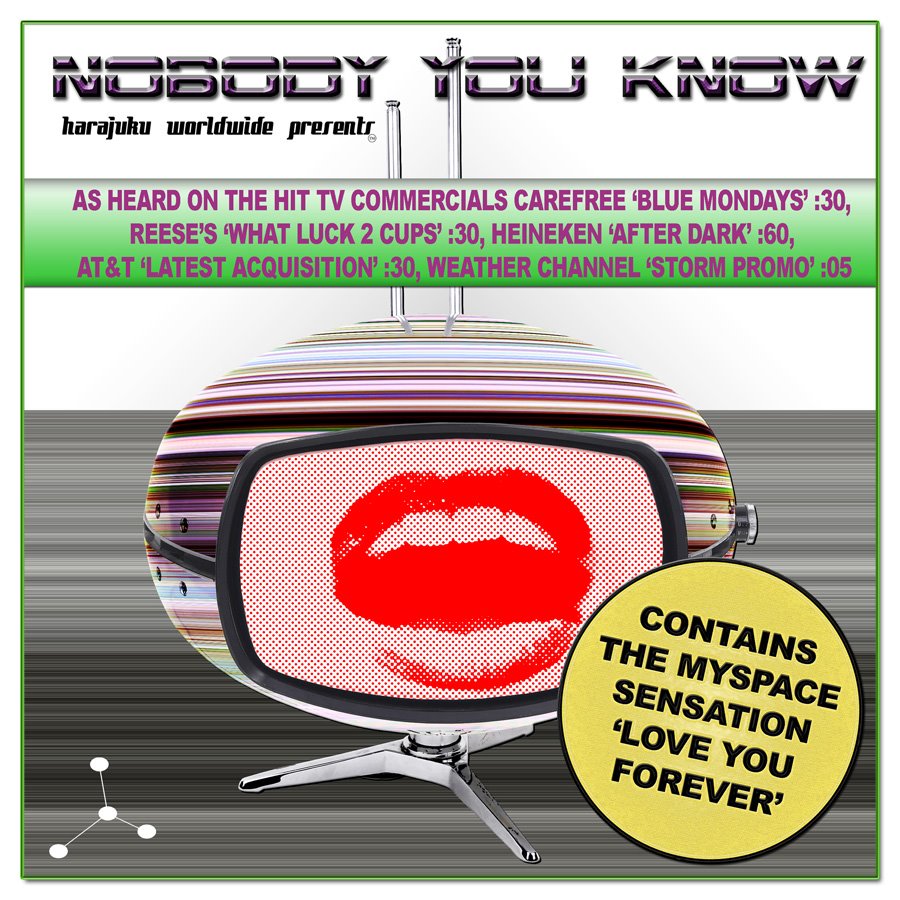
8. Get ready cause your career is about to take off: Eventually the newbie director of the very first commercial that used your music is going to get his or her big Hollywood break and be given the opportunity to make a feature film. No doubt, you've got so much buzz happening yourself, that Hollywood will definitely want you to contribute your breakthrough unreleased single to the soundtrack. Upon the picture’s international smash release you’ll finally get signed to a major label –and on your terms, assuming of course you read every item in the 500 page contract they give you. Oh, who cares about creative control or money anyway, when you're going to be FAMOUS!
9. You've been signed! Your album is slated for immediate release two years from now. Finally, the big moment you've been waiting for: Go ahead and Login to one of the Music Industry message boards, like the Velvet Rope for instance, and tell the world how you're so like the next big thing. It feels good, doesn't it? Of course it does. But, like, leave after you post that and never go back because they'll shred you into little bitty pieces –entertainment forums are notorious for giving a platform to blood thirsty sharks– and it's no fun reading that bitter dreck. And your album will probably get shelved, anyway.
10. Regardless, from here on out, absolutely no mention of your past work in advertising. Sure, it was cool when it happened, but now you're an artist. Of course, you can keep the cover art from your original demo –if you still think it's any good– but why not at least change the sticker to something that promotes the fact that you've arrived, something awesome like:
As Heard On The Hit Movie 'Las Mamas Mas Sexy de Nueva York'
10. One last piece of advice: If you do write a hit song and if the track actually does chart –congratulations darling, here's an invoice for my consultation fee– ditch the sticker all together: we all know that movie rode to box office history on your coat tails, not the other way around. And while you're at it, tell the director to get lost because, really, these days there’s only enough time to thank God and your mom at the Grammies.
DIY, licensing
Saturday, October 01, 2005
Creating Value By Licensing
So, someone wants to use your song in a TV Commercial. What now?
A fair price for a one-time license for a non-hit song from a no name is: whatever the artist is offered, or whatever your agent can negotiate without alienating the interested party. If the song has extended uses, other offers will follow. That's how you make money on licensing.
Songs –or anything for that matter– do not have any value until there is a market for them. You need to create a market. Like anything else, one accomplishes that by selling below cost and undercutting any potential competitors, which allows you to gain traction, publicity and some leverage on subsequent deals and transactions.
If a big agency knocks on your bedroom door and wants to use your song on a commercial that will increase your exposure, and which will also give you a platform to further market yourself –and if you are currently an unknown– don't mess it up by listening to a 'pal' who says your genius is worth more than what the offer is.
I can't tell you how strange it is to me that an unknown artist will give away their entire catalog on the Internet, but then claim it has extraordinary economic value the first time someone expresses interest in licensing a tune.
The prudent thing to do is to go with a reasonable* license for the present, and if the song is as catchy as your mother thinks it is, then other offers will follow (which is where you'll negotiate an ever escalating rate for your material, because now you have value).
*Reasonable means: Non exclusive use or limited exclusivity, for a limited time, in limited media; such as, 12 months for a designated TV/Radio/Internet Campaign, with an option to renew at the same rate, or a rate to be negotiated in good faith.
By the way, if the placement is for the theme of a TV show rather than for a TV or radio commercial, you can expect an equally low fee. Unlike advertising, however, the publishing on a hit show, especially if it goes into syndication will likely make any sum you negotiate very much worth your while. Even established composers scoring an original theme for a piece of TV entertainment will accept a low 'front end' figure betting on a series of fat paychecks on the back end. If the show gets knocked off the air you'll still end up with a bit of work you can use to promote yourself further.
Subsequent interest in your work –if there is any– will enable you to negotiate better terms as you establish a track record.
While it is unlikely several different advertisers will all want to use the same track at the same time in a given territory, sometimes they do. One piece of music can sustain simultaneous advertising licenses negotiated for use in different markets by industry or territory; and also win placement on a variety of entertainment projects, such as movies, games, TV shows.
A determined artist can certainly work the odds if they also learn how and who to pitch material to. But that's a career in and of itself. Do you want to be a music supervisor, or play guitar?
If you think of yourself less a performer and more as a composer, then one song –already favorably placed on a national campaign with a major advertiser– is a great way to introduce music supervisors with the rest of your catalog; and prospective clients in need of original music to your talent. Lots of music production companies were essentially built by one composer/writer who won a prominently placed track that he or she sold or licensed for next to nothing.
A fair price for a one-time license for a non-hit song from a no name is: whatever the artist is offered, or whatever your agent can negotiate without alienating the interested party. If the song has extended uses, other offers will follow. That's how you make money on licensing.
Songs –or anything for that matter– do not have any value until there is a market for them. You need to create a market. Like anything else, one accomplishes that by selling below cost and undercutting any potential competitors, which allows you to gain traction, publicity and some leverage on subsequent deals and transactions.
If a big agency knocks on your bedroom door and wants to use your song on a commercial that will increase your exposure, and which will also give you a platform to further market yourself –and if you are currently an unknown– don't mess it up by listening to a 'pal' who says your genius is worth more than what the offer is.
I can't tell you how strange it is to me that an unknown artist will give away their entire catalog on the Internet, but then claim it has extraordinary economic value the first time someone expresses interest in licensing a tune.
The prudent thing to do is to go with a reasonable* license for the present, and if the song is as catchy as your mother thinks it is, then other offers will follow (which is where you'll negotiate an ever escalating rate for your material, because now you have value).
*Reasonable means: Non exclusive use or limited exclusivity, for a limited time, in limited media; such as, 12 months for a designated TV/Radio/Internet Campaign, with an option to renew at the same rate, or a rate to be negotiated in good faith.
By the way, if the placement is for the theme of a TV show rather than for a TV or radio commercial, you can expect an equally low fee. Unlike advertising, however, the publishing on a hit show, especially if it goes into syndication will likely make any sum you negotiate very much worth your while. Even established composers scoring an original theme for a piece of TV entertainment will accept a low 'front end' figure betting on a series of fat paychecks on the back end. If the show gets knocked off the air you'll still end up with a bit of work you can use to promote yourself further.
Subsequent interest in your work –if there is any– will enable you to negotiate better terms as you establish a track record.
While it is unlikely several different advertisers will all want to use the same track at the same time in a given territory, sometimes they do. One piece of music can sustain simultaneous advertising licenses negotiated for use in different markets by industry or territory; and also win placement on a variety of entertainment projects, such as movies, games, TV shows.
A determined artist can certainly work the odds if they also learn how and who to pitch material to. But that's a career in and of itself. Do you want to be a music supervisor, or play guitar?
If you think of yourself less a performer and more as a composer, then one song –already favorably placed on a national campaign with a major advertiser– is a great way to introduce music supervisors with the rest of your catalog; and prospective clients in need of original music to your talent. Lots of music production companies were essentially built by one composer/writer who won a prominently placed track that he or she sold or licensed for next to nothing.
Thursday, September 01, 2005
Humanitarian Organization Seeks Songwriter
 If you've ever read the Economist magazine, you've noticed the Executive Level Help Wanted Ads for positions at Non Profit Aid and Development Organizations around the world. As much as I would love to be Managing Director for a Human Rights organization in Africa, I never seem to have the required credentials. Just for once, I would like to see an ad that looks like this:
CONSULTATIVE GROUP ON AGRICULTURAL RESEARCH (CGIAR)
The Mission of the Consultative Group on Agricultural Research (CGIAR) is to achieve sustainable food security and reduce poverty in developing countries through scientific research and research-related activities in the fields of agriculture, forestry, fisheries, policy, and environment. The Future Harvest Alliance Office (FHAO) is a unit of the CGIAR System Office that plays an important role in helping the Future Harvest Centers, the operational arm of the CGIAR, to maximize their contribution to the goals and objectives of the CGIAR. For more information on the CGIAR please see www.cgiar.org
The Alliance is seeking a SONGWRITER to lead the Future Harvest Alliance Office (FHAO).
The Songwriter will: Provide poetic and melodic support to the Alliance Executive; manage the human and emotional resources of FHAO members and manage the festivity budget for extracurricular activities funded by the Alliance; represent the FHAO in CGIAR System Office Party activities; contribute to the Alliance by developing jingles, hummable tunes and occasional dance beats; support the Alliance Executive Chair and Executive Committee in defining the yearly work program of Alliance of Future Harvest Centers of the CGIAR ; and of course, write songs.
The ideal applicant will have: made little use of an advanced university degree for at least ten years prior to application.
Applicants are invited to send their curriculum vitae; a letter expressing why they are interested in and qualified for the position; and a demo tape in CD format containing at least three (3) songs.
For further information about the position, please contact Dr Cheryl Williams, Executive Officer, at c.x.williams@cgiar.org.
economist, humor
Sunday, May 01, 2005
Iggy Pop @ The Continental

Alas, no band, although I do still consider myself lucky to have played CB's Gallery stage in the basement two or three of times to an adoring empty room.
Well, of course I went there to enjoy the endless parade of black clad bands that did play. Unfortunately I didn't see anyone I could remotely say lived up to Punk's glory days, when, um, actually, punk was kind of melodic, and if you think about it, not entirely quite as minimal or cartoonish as The Ramones were.
Most memorable punk show I saw wasn't even at CB's but at The Continental, another legendary joint a couple blocks away, and probably not long for this world either. In the mid-nineties two friends of mine were playing in Iggy Pop's band – Eric Schermerhorn (Guitar) and Hal Cragin (Bass) – and they had let us in on a 'secret' performance. So, naturally, after wrapping things up at the studio, Chris Fosdick and I went downtown to be part of the scene.
Got there a little early and staked out our claim to two spots in the middle of the club. No seats mind you; we just stood there. By the time the show started, though, not only was the place packed, it was scary overcrowded. Women were standing on the bar, which could have been sexy, but they looked like they were reaching for oxygen rich air that perhaps floated nearer to the ceiling. As for where Chris and I stood, what seemed like great a vantage point before, now gave off a dread like vibe from the knowledge that we were in the inescapable midst of an insufferable death trap.
And then Iggy came out and he fookin' rocked, dude!
Ha!
Word got out; I guess some calls were made by concerned neighbors, and eventually the fire department came 'round and shut the show down, which was the right thing to do, and only added to Iggy's bad boy rep. In fact, it was such a strategic move, that I wouldn't be surprised if it was his manager having a Big Mac next door who placed the 911 call. Hell, I know the people sitting in Mickey D's saw the walls buckles as soon as Iggy hit the stage. The sound sucked of course. It was just one big roar punctuated by intermittent preening.
I think downtown hipsters will agree, something cool about it, tho'.
CBGB's, Iggy Pop
Thursday, April 07, 2005
The Lizard King
Capped off my first performance at CBGB's 313 Gallery with the following original song, The Lizard King.
The song itself is partly inspired by Jim Morrison and partly the product of chance. Each individual line –and the odd couplet– in the song once belonged to another song I'd written over the previous 20 years.
While sitting at my desk in 1998, waiting for inspiration to hit, I stared down at my feet, and among the scattered pages of lyrics I picked out a line here, a line there. It began as a lark, really. But the result was a unified composition which incredibly makes some kind of sense. I guess today we'd call it a mashup.
Also the product of synchronicity, the choruses each begin with an allusion to the Virgin Mary ('Dolores Our Lady of Sorrows', 'Lolita' and 'Ave Maria').
Somehow, it all just works.
The Lizard King
By Terry O’Gara
©1998
And so the lizard king will not return
And we will never know
And we will never learn
What never was will never be
I guess I was one of those that never did believe
In anything, in anything but myself
And I don’t want your help
I know all I need to know of love
And that’s enough
I want to feel the pain
I think it’s better this way
Dolores Our Lady of Sorrows
Was seen at a truck stop in Ohio
But you had to stand on the outside looking in
Well isn’t that typical, hypocritical
But we all gave up a hymn
Singing ‘Holy, Holy
Never let go of me’
And ‘Save me, save me’
From the fric and the frac
Oh if only I believed
In all of this crap
Lolita Our Lady of Toenails
Sits in the grass while I sip my cocktails
Shivinanda says sit still and focus
But I twitch like a hundred thousand locusts
Meanwhile a rock’n’roll angel eats her cocoa puffs in heaven
While a video camera swallows your every move
Desperately you search the house for meaning
While she sits alone in her room
Ave Maria Oh baby
Ave Maria my love
How is it everything we put our faith in
Couldn’t save us in the end
And so the lizard king will not return
And we will never know
And we will never learn
What never was will never be
I guess I was one of those that never did believe–
In anything.
The song itself is partly inspired by Jim Morrison and partly the product of chance. Each individual line –and the odd couplet– in the song once belonged to another song I'd written over the previous 20 years.
While sitting at my desk in 1998, waiting for inspiration to hit, I stared down at my feet, and among the scattered pages of lyrics I picked out a line here, a line there. It began as a lark, really. But the result was a unified composition which incredibly makes some kind of sense. I guess today we'd call it a mashup.
Also the product of synchronicity, the choruses each begin with an allusion to the Virgin Mary ('Dolores Our Lady of Sorrows', 'Lolita' and 'Ave Maria').
Somehow, it all just works.
The Lizard King
By Terry O’Gara
©1998
And so the lizard king will not return
And we will never know
And we will never learn
What never was will never be
I guess I was one of those that never did believe
In anything, in anything but myself
And I don’t want your help
I know all I need to know of love
And that’s enough
I want to feel the pain
I think it’s better this way
Dolores Our Lady of Sorrows
Was seen at a truck stop in Ohio
But you had to stand on the outside looking in
Well isn’t that typical, hypocritical
But we all gave up a hymn
Singing ‘Holy, Holy
Never let go of me’
And ‘Save me, save me’
From the fric and the frac
Oh if only I believed
In all of this crap
Lolita Our Lady of Toenails
Sits in the grass while I sip my cocktails
Shivinanda says sit still and focus
But I twitch like a hundred thousand locusts
Meanwhile a rock’n’roll angel eats her cocoa puffs in heaven
While a video camera swallows your every move
Desperately you search the house for meaning
While she sits alone in her room
Ave Maria Oh baby
Ave Maria my love
How is it everything we put our faith in
Couldn’t save us in the end
And so the lizard king will not return
And we will never know
And we will never learn
What never was will never be
I guess I was one of those that never did believe–
In anything.
Wednesday, April 06, 2005
CBGB's 313 Sessions
April 4, 2005 was my final performance at CBGB's 313 Gallery. In my brief history with the venue, my repetoire included the following original material:
Things Fall Apart
Branded @ Birth
Deep Kiss Nine
Union City
The Lizard King
Love As It Ever Is
Right About Now
Cityscape
Trench Coat Mafia
Honest To Badness
Acid Rain
CBGB's, songwriter
Things Fall Apart
Branded @ Birth
Deep Kiss Nine
Union City
The Lizard King
Love As It Ever Is
Right About Now
Cityscape
Trench Coat Mafia
Honest To Badness
Acid Rain
CBGB's, songwriter
Subscribe to:
Posts (Atom)